
Criminal law is a cornerstone of societal order, designed to uphold justice by defining criminal behavior, regulating the prosecution of accused individuals, and ensuring fair trials. As society evolves, so do the complexities of criminal law, necessitating ongoing education and adaptation for legal professionals. This article delves into the essential elements of criminal law education, emphasizing the importance of specialized training, practical experience, technological advancements, and continuous professional development. By exploring these facets, current and aspiring criminal lawyers can better navigate the legal landscape and ensure fair representation for all.
The Importance of Specialized Education
Specialized education in criminal law is foundational for developing a robust understanding of the field’s complexities. Law schools offer a variety of courses focusing on criminal procedure, substantive law, constitutional protections, and the ethical duties of criminal defense lawyers. For example, Pace Law School provides an extensive curriculum that includes doctrinal courses, simulations, and experiential learning through criminal law clinics. These programs equip students with critical thinking skills and legal knowledge necessary to handle diverse criminal cases, from minor offenses to serious felonies.
Advanced courses in criminal law education delve into specific areas such as forensic evidence, juvenile justice, and white-collar crimes. These specialized subjects prepare students for the nuances of different types of criminal cases. Additionally, courses on criminal justice reform, racial discrimination, and human rights issues are becoming increasingly important. These topics ensure that future lawyers are aware of the broader social context in which they practice, promoting a more equitable legal system.
Practical Training through Legal Clinics
Practical experience is a crucial component of effective criminal law education. Legal clinics provide students with the opportunity to apply theoretical knowledge to real-world cases under the guidance of experienced attorneys. At institutions like Harvard Law School and Stanford Law School, criminal law clinics allow students to represent clients in misdemeanor and felony cases, participate in plea negotiations, and conduct trials. This hands-on experience is invaluable for understanding the procedural and strategic aspects of criminal defense.
In these clinics, students also learn to navigate the emotional and ethical complexities of representing clients accused of crimes. They gain experience in client interviewing, legal research, and motion practice, which are essential skills for any criminal lawyer. Moreover, clinics often emphasize community service, allowing students to work with underserved populations and address issues such as wrongful convictions and police misconduct. This experience not only enhances legal skills but also fosters a sense of social justice and responsibility.
Continuous Legal Education and Professional Development
Continuous professional development is vital for criminal law practitioners to stay updated on the latest legal developments and maintain their competency. Continuing Legal Education (CLE) programs provide essential updates on new legislation, case law, and best practices in criminal defense. Organizations like the American Bar Association (ABA) and the National Association of Criminal Defense Lawyers (NACDL) offer a wide range of CLE opportunities, including webinars, seminars, and conferences. These programs cover various topics, such as advanced trial advocacy, forensic science, and the impact of recent Supreme Court decisions on criminal law.
Law firms and legal organizations often provide in-house training to keep their attorneys updated on emerging legal trends and technological advancements. Workshops and guest lectures by experts in criminal law help practitioners refine their skills and stay competitive. Continuous learning ensures that criminal lawyers can effectively advocate for their clients and navigate the evolving legal landscape.
Technological Advancements and Their Impact
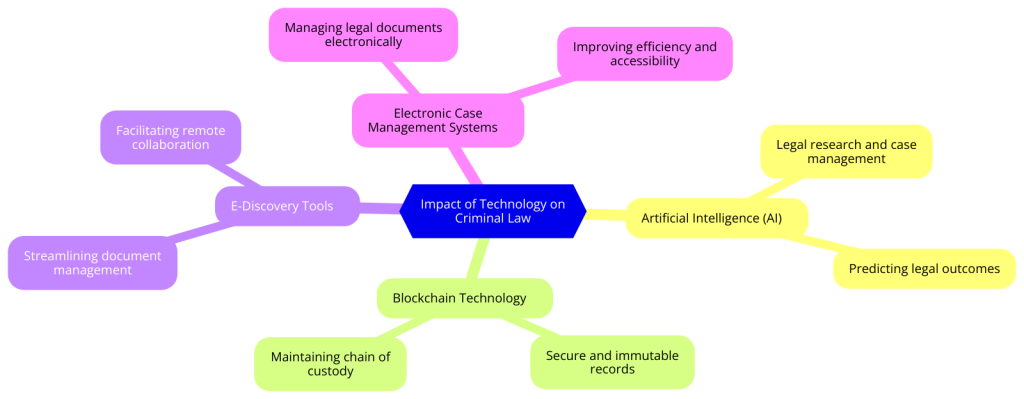
Technology is transforming the practice of criminal law, introducing new tools and methodologies that enhance the efficiency and effectiveness of legal practice. For instance, artificial intelligence (AI) and machine learning are revolutionizing legal research and case management. AI can quickly analyze vast amounts of legal data, identify relevant case law, and predict legal outcomes, allowing lawyers to build stronger cases more efficiently.
Blockchain technology is another innovation impacting criminal law, providing secure and immutable records of legal transactions and evidence. This technology ensures the integrity of legal documents and helps prevent tampering, which is crucial in criminal cases where the chain of custody of evidence must be meticulously maintained. Additionally, e-discovery tools and electronic case management systems streamline the management of legal documents and facilitate remote collaboration among legal teams.
Understanding and leveraging these technologies is essential for modern criminal law practitioners. Legal education programs are beginning to incorporate training on these tools, ensuring that future lawyers are proficient in the latest technological advancements and can use them to provide better legal services to their clients.
Addressing Racial Discrimination in the Criminal Justice System
Racial discrimination remains a pervasive issue in the criminal justice system, affecting everything from police practices to sentencing. Ensuring fair representation for all individuals, regardless of race or ethnicity, is a fundamental principle of justice. Reports from the Office of the High Commissioner for Human Rights (OHCHR) and other organizations highlight ongoing issues such as racial profiling, disproportionate incarceration rates, and biased sentencing practices.
To address these issues, criminal law education must include training on cultural competency, anti-discrimination laws, and strategies for advocating for racial justice. Law schools and professional organizations are increasingly incorporating these topics into their curricula, helping future lawyers understand the impact of systemic racism and develop strategies to combat it. Additionally, experiential learning opportunities, such as working with civil rights organizations and participating in public interest law projects, allow students to gain practical experience in advocating for racial justice.
Ethical and Professional Standards
Maintaining high ethical and professional standards is crucial in criminal law practice. Lawyers must navigate complex ethical dilemmas, such as conflicts of interest, confidentiality, and the duty to provide zealous representation while upholding the integrity of the legal profession. Training programs emphasize the importance of ethics in practice, using case studies and real-life scenarios to illustrate common ethical challenges and appropriate responses.
Continuous education on ethics ensures that criminal law professionals remain aware of new developments and best practices. This includes understanding the ethical implications of new technologies, such as the use of AI in legal practice and the ethical considerations surrounding digital evidence. Adhering to high ethical standards builds trust with clients and upholds the credibility of the criminal justice system.
The Role of Mentorship and Networking
Mentorship and networking are invaluable for professional development in criminal law. Mentors provide guidance, share experiences, and offer career advice, helping newer lawyers navigate the complexities of the field. Networking opportunities, such as attending industry conferences and joining professional associations, allow lawyers to connect with peers, stay informed about industry trends, and identify potential career opportunities.
Mentorship programs, both formal and informal, are valuable for career growth. Experienced lawyers can offer insights into navigating complex cases, developing client relationships, and advancing within the profession. Networking events provide platforms for lawyers to exchange ideas, collaborate on projects, and stay connected with industry developments. These interactions are crucial for career advancement and professional fulfillment in criminal law.
In Conclusion
Educating for fair representation in criminal law requires a comprehensive approach that includes specialized education, practical experience, technological proficiency, continuous learning, and ethical practice. By staying informed about technological advancements, regulatory changes, and societal issues, criminal law professionals can effectively address the complexities of their field and provide high-quality legal services. As the legal landscape continues to evolve, ongoing professional development and a commitment to ethical standards will be key to ensuring justice and fairness for all.

Michael E Weintraub is an attorney and founder of the Law Office of Michael E. Weintraub, LLC in Neptune, NJ. With over 25 years of experience in trials, estate planning, and estate administration, he is known for delivering client-focused legal solutions with integrity and precision.