
In an increasingly interconnected world, international law plays a critical role in maintaining order and resolving conflicts across borders. For lawyers, understanding the complexities of international law is essential to effectively navigate the global challenges of today and tomorrow. This article explores how international law equips legal professionals with the tools they need to address issues that transcend national boundaries, including human rights, environmental protection, cybersecurity, and more. We will delve into the key areas of international law, the skills required to excel in this field, and the importance of continuous learning to stay ahead in a rapidly changing legal landscape.
The Foundations of International Law
International law is a body of rules established by treaties, customs, and legal precedents that govern the interactions between sovereign states and other international actors. It covers a wide range of issues, from trade and diplomacy to environmental protection and human rights. Understanding the origins and development of international law is crucial for modern lawyers, as it provides the framework within which global legal disputes are resolved.
One of the fundamental aspects of international law is its reliance on cooperation and consensus among states. Unlike domestic law, there is no overarching authority to enforce international law; instead, it is upheld through treaties and agreements that states voluntarily enter into. This makes diplomacy and negotiation key skills for lawyers working in this field.
Key Areas of International Law Practice
International law encompasses several specialized areas, each with its own set of challenges and opportunities. Some of the most prominent areas include:
- Human Rights Law: Protecting individual rights and freedoms on a global scale. Lawyers in this field often work with international organizations, governments, and NGOs to advocate for victims of human rights violations.
- Environmental Law: Addressing global environmental issues, such as climate change and pollution. Lawyers in this field play a crucial role in shaping international agreements and regulations that aim to protect the planet.
- Trade and Investment Law: Facilitating international trade and protecting investments across borders. This area of law is critical for ensuring fair and equitable treatment of businesses and investors in the global marketplace.
- Cybersecurity and Data Protection: With the rise of digital technologies, cybersecurity has become a significant concern for governments and businesses alike. Lawyers specializing in this area help develop and enforce international regulations to protect data and ensure the safe operation of digital networks.
The Role of International Organizations
International organizations, such as the United Nations (UN), the World Trade Organization (WTO), and the International Criminal Court (ICC), play a central role in the development and enforcement of international law. These organizations provide forums for states to negotiate treaties, resolve disputes, and address global challenges.
For lawyers, working with or within these organizations offers the opportunity to influence international policy and contribute to the development of global legal standards. The UN International Law Commission, for example, is a key body responsible for the codification and progressive development of international law, addressing issues ranging from diplomatic relations to environmental law.
Essential Skills for International Law Practice
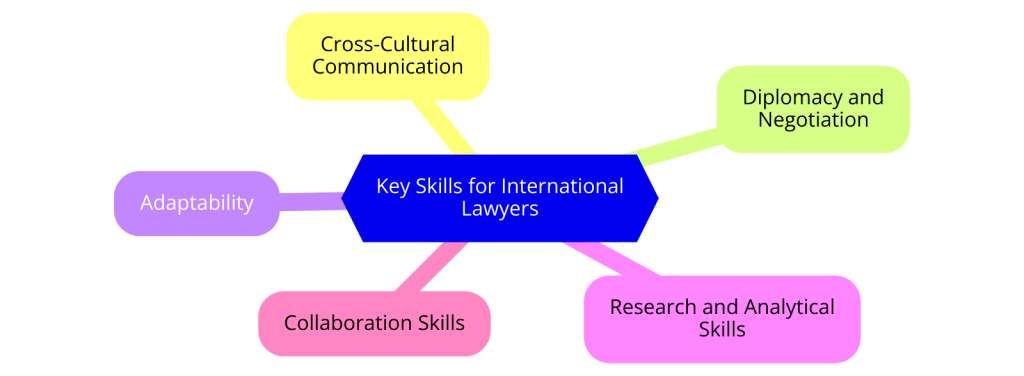
Practicing international law requires a unique set of skills that go beyond traditional legal expertise. Key skills include:
- Cross-Cultural Communication: Lawyers must be able to navigate different legal systems, cultures, and languages to effectively represent clients in international disputes.
- Diplomacy and Negotiation: Given the consensual nature of international law, lawyers need strong negotiation skills to broker agreements between states and other international actors.
- Adaptability: The global legal landscape is constantly changing, with new challenges emerging regularly. Lawyers must be able to adapt to new legal developments and remain flexible in their approach.
The Impact of Technology on International Law
Technology is reshaping the practice of international law in profound ways. From cybersecurity threats to digital trade, the legal issues surrounding technology are becoming increasingly complex and global in scope. Lawyers must stay informed about the latest technological advancements and their implications for international law.
For example, the regulation of cyberspace presents significant challenges due to the differing legal frameworks and priorities of states. Lawyers specializing in this area must work to bridge these gaps and develop legal solutions that protect both national security and individual freedoms.
Continuous Learning and Professional Development
The field of international law is dynamic, with new treaties, regulations, and case law emerging regularly. For legal professionals, continuous learning is essential to stay current and maintain expertise in this field. Participating in international law fellowships, attending conferences, and engaging in academic research are just a few ways that lawyers can deepen their knowledge and skills.
Programs like the United Nations International Law Fellowship provide valuable opportunities for legal professionals to receive advanced training from leading international law scholars and practitioners. Such programs not only enhance legal expertise but also promote greater understanding and cooperation among legal professionals from different countries.
Preparing for Global Legal Challenges
As the world becomes more interconnected, the challenges facing international law are becoming more complex and far-reaching. Lawyers must be prepared to address issues such as climate change, global health crises, and international conflicts. By developing a deep understanding of international law and staying informed about global trends, legal professionals can play a crucial role in shaping the future of global governance.
The importance of international law cannot be overstated in today’s world. As new global challenges arise, the need for skilled international lawyers will only continue to grow.
In Conclusion
International law is a vital tool for addressing the complex legal challenges of our globalized world. For lawyers, mastering the intricacies of international law is essential for navigating these challenges and making a meaningful impact on the global stage. By understanding the key areas of practice, honing essential skills, and engaging in continuous learning, legal professionals can be well-prepared to tackle the global challenges of today and tomorrow.

Michael E Weintraub is an attorney and founder of the Law Office of Michael E. Weintraub, LLC in Neptune, NJ. With over 25 years of experience in trials, estate planning, and estate administration, he is known for delivering client-focused legal solutions with integrity and precision.