
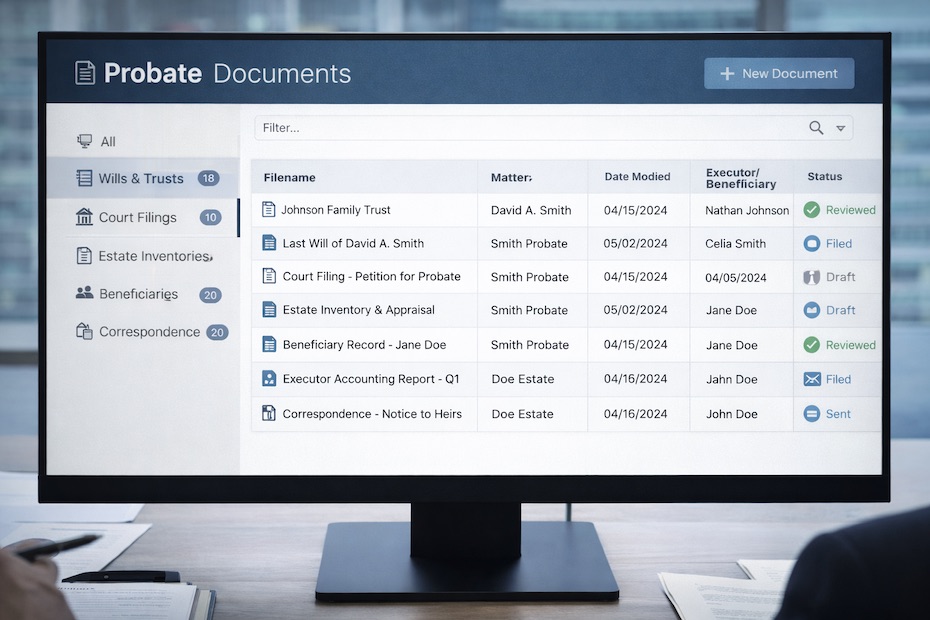
Complex probate cases demand precision, traceability, and control. The right document management platform keeps estates organized, deadlines visible, and every filing defensible while reducing administrative drag across long timelines and multiple stakeholders.
Probate professionals face fragmented records, legacy paperwork, court deadlines, and sensitive beneficiary data. This article breaks down the best document management platforms for complex probate case handling, explaining where each excels and how you decide what fits your workflow.
Why document management matters in complex probate cases
Probate work creates document volume fast. Wills, trust instruments, inventories, valuations, correspondence, filings, and executor reports accumulate across months or years. Without structured control, teams lose time, miss deadlines, and increase exposure to disputes.
A modern document platform centralizes estate records, enforces version control, and maintains a clear audit trail. You gain faster retrieval, cleaner collaboration, and consistent execution across cases that often outlive staffing changes.
What should probate professionals look for in a document platform?
Before selecting software, you evaluate more than storage. Probate workflows need structured permissions, long-term retention, and clear accountability across documents touched by courts, executors, and beneficiaries.
The strongest platforms support metadata tagging, deadline tracking, secure sharing, and defensible records management. You also want predictable access controls that scale across multiple estates without creating operational friction.
NetDocuments – Structured document control for probate firms
NetDocuments remains a leading choice for probate teams that prioritize control, compliance, and structured workflows. You gain matter-centric organization that keeps each estate segmented while allowing firm-wide standards.
Version history, secure sharing, and detailed access logs support probate timelines that stretch across years. The platform fits teams managing contested estates or multi-jurisdiction matters where document clarity prevents disputes.
iManage – Enterprise-grade governance for high-volume probate cases
iManage suits probate practices handling large caseloads or operating inside broader firms. Its strength lies in document classification, audit visibility, and permission governance.
You control who accesses sensitive estate records while maintaining consistent naming and filing rules. For probate teams balancing collaboration with risk management, iManage delivers long-term operational discipline.
Clio Manage – Probate document organization with case context
Clio Manage works well for probate professionals who want document management embedded inside broader case operations. Documents connect directly to matters, tasks, and communications without separate systems.
You move between filings, correspondence, and executor notes with minimal friction. For practices seeking efficiency without enterprise complexity, Clio offers strong value for routine and moderately complex probate cases.
Worldox – Familiar structure with strong document indexing
Worldox appeals to probate teams that value structured indexing and on-premise or hybrid flexibility. The system emphasizes predictable filing rules and fast retrieval.
Probate professionals managing older estates or legacy records often appreciate Worldox’s familiar folder logic paired with searchable metadata. It supports gradual modernization without forcing workflow disruption.
SharePoint – Customizable probate document environments
SharePoint works best when probate teams require flexibility and internal configuration. You build estate libraries, permission layers, and workflows tailored to firm standards.
With proper governance, SharePoint handles document collaboration, retention policies, and secure access. It suits teams with technical resources capable of enforcing discipline inside a customizable system.
Box – Secure cloud storage for estate collaboration
Box provides secure cloud document storage with strong sharing controls. Probate teams working with external parties often use Box to exchange large document sets safely.
While Box lacks deep legal-specific features, its strength lies in ease of use and secure access. It works best when paired with internal processes that define how probate documents move and update.
Laserfiche – Automation-driven probate document management
Laserfiche excels when probate workflows require automation. You configure document routing, approvals, and retention schedules that reduce manual tracking.
Probate teams handling repeatable filings or standardized court submissions benefit from automated triggers. The platform supports consistency across cases without sacrificing document integrity.
How do these platforms handle sensitive probate data?
Security matters in probate. Estates involve financial records, personal correspondence, and beneficiary details that demand strict access controls.
Top platforms provide encryption, permission layers, and activity tracking. You maintain visibility into who accessed documents and when, supporting both internal accountability and external scrutiny.
Can document platforms reduce probate delays and disputes?
Yes, when used correctly. Clear document organization shortens response time to court requests and beneficiary inquiries.
When records remain complete and traceable, probate professionals reduce friction during audits or contested proceedings. The platform becomes a defensive asset, not just storage.
Choosing the right platform for your probate practice
Selection depends on case complexity, team size, and technical maturity. Enterprise systems deliver control at scale. Simpler platforms support speed and usability.
You evaluate how long estates remain open, how often documents change, and how many external parties interact with records. The right choice aligns structure with real operational behavior.
Best document management software for probate cases
- NetDocuments and iManage for complex, long-term estates
- Clio Manage for integrated probate workflows
- SharePoint and Laserfiche for customizable control
- Box for secure external collaboration
Build a probate document system that protects every estate
Complex probate work rewards discipline. The right document management platform gives you clarity when timelines stretch and scrutiny increases. You reduce administrative drag, protect sensitive records, and maintain credibility across every estate you manage. When documents stay organized, probate strategy stays focused. Choose a platform that supports precision today and resilience tomorrow.

Michael E Weintraub is an attorney and founder of the Law Office of Michael E. Weintraub, LLC in Neptune, NJ. With over 25 years of experience in trials, estate planning, and estate administration, he is known for delivering client-focused legal solutions with integrity and precision.