
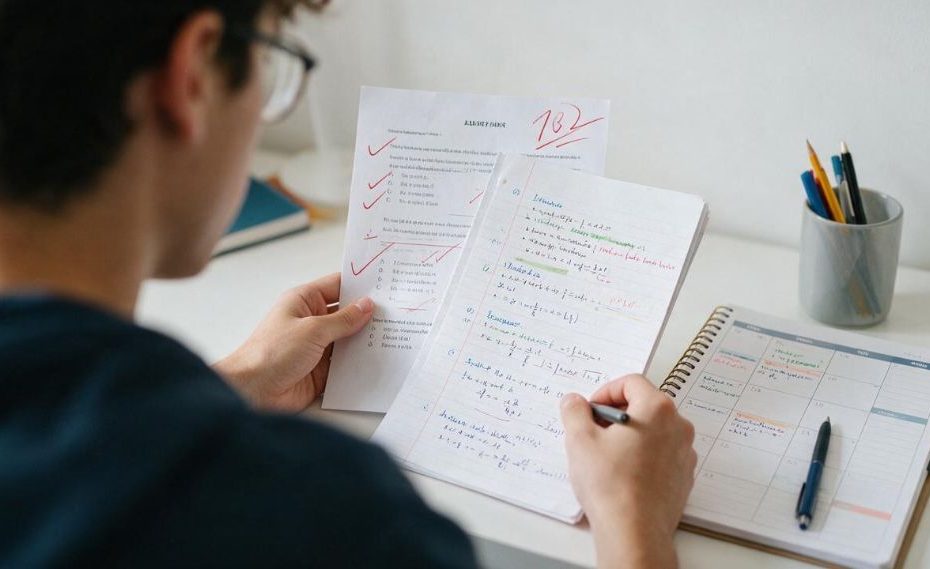
Bad midterm recovery starts by treating the score as information, not a verdict on your ability or the rest of your semester. You can still finish strong if the remaining grade math works, you identify what caused the result, and you change your study system before the next exam.
Your first move shouldn’t be studying longer without a plan. You need to review the syllabus, understand your available options, and determine whether your preparation matched the way the professor tested you. The steps below help you make those decisions in the order that matters.
Understand What The Midterm Score Actually Means
A failed midterm can feel like proof that you’re bad at the subject, especially if you studied for several days. The score only shows how you performed on one assessment under a specific set of conditions. It doesn’t tell you whether you can learn the remaining material, improve your exam technique, or earn enough points to reach your course goal.
Start by separating the emotional reaction from the academic problem. Feeling embarrassed, disappointed, or worried is understandable, but those feelings can push you toward rushed decisions. Give yourself a short period to cool down, then move into information-gathering mode.
Look at the exam’s weight, the class average if your professor shares it, and any comments written on your work. A low raw score may carry less weight than you fear, or the course may still have several major assignments remaining. You won’t know whether recovery is realistic until you examine the full grading structure.
Do The Grade Math Before Making A Decision
You can still pass after failing a midterm when enough course points remain and the required scores are achievable. Check the syllabus and gradebook rather than estimating from memory.
List every graded item, its weight, your score, and the work that remains. Then use this formula: required average on remaining work = target course grade minus weighted points already earned, divided by the remaining course weight. A grade calculator can help, but verify that it handles weighted categories, dropped scores, curves, and participation points correctly.
Calculate several outcomes instead of focusing on one ideal grade. Compare what you need to pass, meet a prerequisite requirement, maintain a scholarship standard, or earn your original target grade. This gives you a realistic range and shows whether the course can be recovered without neglecting your other classes.
Pay close attention to the final exam weight. A major cumulative final can create room for recovery, but it can also raise the risk if you haven’t repaired earlier knowledge gaps. If the final carries little weight, projects, quizzes, homework, or participation may matter more than you expected.
Talk To Your Professor Before You Decide To Drop
Contacting your professor is an information-gathering step, not a request for a free grade. A short, prepared conversation can clarify grading policies, common mistakes, available support, and whether your recovery target is realistic.
Review the syllabus before sending an email. Your message should identify the course and exam, request a brief meeting, and state that you want to understand your errors and improve your preparation. Keep the tone calm and specific rather than explaining every personal fear attached to the grade.
During office hours, ask which mistakes cost you the most points and what strong answers needed to include. You can also ask how the next exam differs, whether the final is cumulative, and which practice materials best reflect the expected level of difficulty. Bring your exam, notes, and a short list of questions so the meeting stays focused.
If extra credit is mentioned in the syllabus, ask how it works. If it isn’t listed, focus first on existing assignments and approved course options. Asking for points without showing interest in correcting your learning problems can sound like bargaining rather than academic planning.
Run An Exam Post-Mortem That Leads To Action
An exam post-mortem helps you find the reason behind the score. Review the test by error type instead of reading every missed answer as the same problem.
Sort mistakes into categories: missing knowledge, misunderstood concepts, calculation errors, weak written explanations, poor question interpretation, or time pressure. Mark any answer you changed from correct to incorrect, as well as questions you answered through guessing. Patterns matter more than the total number of red marks.
An exam wrapper can make this review more useful. It prompts you to compare how you prepared, how you used your time, which errors appeared, and what you’ll change before the next assessment. This turns a disappointing score into a specific set of adjustments.
Ask whether you truly knew the material without looking at your notes. Familiarity can feel like mastery when you reread a chapter or recognize a worked solution. Metacognition, which means planning, monitoring, and evaluating your learning, helps you detect that gap before exam day.
Rebuild Your Study Plan With Evidence-Based Methods
Studying harder won’t fix a method that produces recognition rather than recall. Research on learning techniques supports practice testing and distributed practice, while passive rereading and highlighting tend to provide less value.
Replace long review sessions with shorter study blocks spread across several days. At the start of a block, close your notes and write what you remember, solve problems from scratch, or answer practice questions. Check your work afterward, record the errors, and return to those areas during a later session.
Retrieval practice strengthens your ability to recall information without prompts. Flashcards can support active recall when they require a real answer rather than a quick recognition judgment. Practice exams, blank-page summaries, verbal explanations, and mixed problem sets also reveal whether you can use the material independently.
Add interleaving when the course requires you to choose among several methods or problem types. Instead of completing a large set of nearly identical questions, mix older and newer topics. This makes practice harder, but it trains you to identify which method a question requires.
Prepare Differently For A Cumulative Final
A cumulative final requires ongoing review rather than a rushed return to old chapters during the last week. Build older material into your schedule now, especially the topics that caused problems on the midterm.
Create a topic list from the syllabus, lectures, assignments, and previous exams. Label each topic according to whether you can explain it, apply it, and answer questions without notes. Spend more time on weak areas, but keep testing stronger areas so they don’t fade.
Use mixed practice sessions that combine recent material with earlier concepts. If your professor provides past exams, sample questions, or review sheets, complete them under realistic time limits. Review why each incorrect answer failed instead of memorizing the answer key.
Plan at least one full rehearsal before the final. Use the expected time limit, permitted materials, and question format. The goal is to measure pacing, recall, and decision-making before the real exam places those skills under pressure.
Manage Test Anxiety And The Emotional Spiral
Test anxiety can interfere with attention, recall, pacing, and confidence. Preparation helps, but you also need a plan for the physical and mental reaction that may appear before or during the exam.
Protect your sleep before major assessments and avoid replacing rest with an all-night study session. Practice under timed conditions so the exam format feels familiar. Regular movement, steady meals, and brief relaxation exercises can also make it easier to settle into the task.
During the exam, pause and slow your breathing if panic begins to build. Read the directions carefully, mark difficult questions, and collect available points before returning to harder items. Use a pacing plan so one question doesn’t consume time needed elsewhere.
Self-compassion doesn’t mean ignoring the grade or lowering your standards. It means responding to a setback without turning it into a personal attack. A calmer response helps you review the evidence, ask for support, and return to productive work sooner.
Choose Between Withdrawing, Pass/Fail, Or Pushing Through
Withdrawal can be a reasonable academic decision when the grade math is no longer workable or the course is damaging your performance across several classes. It isn’t automatically the best choice, and staying enrolled isn’t automatically a sign of persistence.
Before withdrawing, check the deadline and speak with your professor, academic advisor, registrar, and financial aid office. A withdrawal can affect enrollment status, aid eligibility, scholarships, academic progress requirements, housing, athletics, or future course sequencing. These rules vary by institution and student situation.
Ask whether pass/fail grading, a late withdrawal, an incomplete grade, a retake, or grade replacement exists at your school. Confirm how each choice affects prerequisites, your major, and future applications. Never assume a policy applies because another student used it in a different course.
Push through when the required scores are realistic and you can make the needed changes without sacrificing your other responsibilities. Consider withdrawal when recovery depends on near-perfect performance, major policy exceptions, or a workload you can’t sustain. Base the decision on verified numbers and rules rather than shame.
Protect Your GPA And Communicate With Family
One bad midterm doesn’t usually appear as a separate item on your transcript. The final course grade is what typically affects your grade point average (GPA), though you should confirm your institution’s reporting policies.
Estimate how several possible course grades would affect your GPA. Review any minimum standards connected to scholarships, academic standing, your major, or future courses. An advisor can help you understand these rules without guessing.
If you need to tell family members, lead with facts and a recovery plan. Explain the exam’s weight, your current course standing, what you learned from reviewing the test, and what support you’re using. A concrete plan often keeps the conversation focused on decisions rather than panic.
If family pressure makes it difficult to study or think calmly, speak with an advisor, academic coach, or counselor first. They can help you organize the information and prepare for the conversation. You don’t need to present false confidence, but you should avoid making promises that the grade math can’t support.
Build A Week-By-Week Academic Comeback Plan
Your study plan after a midterm should connect daily work to the next graded assessment. A calendar filled with vague labels like “study chemistry” won’t tell you what to do when the session begins.
Assign a specific task to every block: complete ten mixed problems, recall a chapter from memory, review an error log, attend office hours, or take a timed practice quiz. Schedule demanding work when your attention is strongest. Leave buffer time for assignments that take longer than expected.
- First week: Calculate your grade, review the exam, meet with the professor, and identify error patterns.
- Second week: Repair the weakest concepts through tutoring, active recall, and targeted practice.
- Following weeks: Use spaced review, mixed questions, and regular self-testing across old and new material.
- Before the next exam: Complete timed practice, review recurring errors, and confirm your pacing plan.
- After each assessment: Compare the result with your plan and adjust the schedule.
Measure completed practice and accuracy rather than hours spent near your books. Track whether you can solve questions without notes and explain why an answer works. Your bad midterm recovery plan should become more specific as you gather evidence about your weak points.
Get Help Before The Work Piles Up
Ask for help when you can’t explain your exam errors, your required grades are unclear, or your study plan keeps breaking down. Early support gives you more time to use the advice before major deadlines.
Your campus may offer tutoring, supplemental instruction, writing support, study groups, academic coaching, or subject-specific help sessions. Bring attempted work to tutoring so the session can focus on where your reasoning breaks down. A tutor should help you understand and practice the process, not complete the work for you.
An academic advisor can help you compare course options and understand how a decision fits your degree plan. A counselor can help when anxiety, shame, low mood, or family pressure is interfering with sleep, concentration, or daily functioning. Use the service that matches the problem rather than expecting one person to solve every part of it.
If several midterms went badly, triage your courses. Calculate the standing in each class, list upcoming deadlines, and identify where a small amount of work can protect the most points. Then meet with advisors and instructors promptly instead of waiting for another round of grades.
Common Questions About Bad Midterm Recovery
Can One Bad Midterm Ruin Your Course Grade?
One midterm can lower your course grade, but its impact depends on its weight and the points still available. Calculate several possible outcomes using the syllabus before deciding that the course is lost.
Why Did You Fail After Studying Hard?
Your preparation may not have matched the exam’s demands. Rereading, highlighting, and reviewing familiar solutions can create confidence without testing whether you can recall or apply the material independently.
Should You Email Your Professor After A Bad Exam?
Yes, when the email requests clarification, feedback, or a meeting. Keep it brief, professional, and focused on understanding mistakes and preparing better for future assessments.
How Do You Recover When The Final Is Cumulative?
Begin reviewing older material now and mix it with current topics. Use timed retrieval practice, an error log, and repeated problem-solving instead of saving earlier units for the final week.
When Should You Seek Tutoring?
Seek tutoring when you can’t identify why your answers are wrong, keep repeating the same errors, or struggle to begin practice independently. Don’t wait until the final days before an exam.
What If You Failed Multiple Midterms?
Calculate your standing in every course and compare the remaining workload. Speak with professors and an advisor quickly, then prioritize the classes where recovery is mathematically realistic and academically useful.
How Can You Recover From A Bad Midterm?
- Calculate the grade you still need.
- Ask your professor about policies and options.
- Review the exam for error patterns.
- Use active recall and spaced practice.
- Make a weekly plan and get campus help.
Turn The Midterm Into A Better Finish
A poor score becomes more manageable once you replace assumptions with grade math, feedback, and a scheduled recovery plan. Review what went wrong, use retrieval practice and spaced study, and get help before another assessment passes. Check institutional rules before choosing withdrawal, pass/fail grading, or another course option. Your goal isn’t to erase the midterm; it’s to make better academic decisions with the points, time, and support still available. A bad midterm recovery can’t guarantee a particular grade, but it can give you a realistic path toward the strongest finish still within reach.
References
- Improving Students’ Learning With Effective Learning Techniques
- Test-Enhanced Learning: Taking Memory Tests Improves Long-Term Retention
- A National Experiment on Growth Mindset and Achievement
- Carnegie Mellon University Eberly Center: Exam Wrappers
- University of North Carolina Learning Center: Metacognition
- University of North Carolina Learning Center: Studying for Exams
- Cornell University Learning Strategies Center: Exam Preparation
- Cornell University Learning Strategies Center: Talking to Professors
- Yale Poorvu Center for Teaching and Learning: Exam Strategies
- Kansas State University Counseling Services: Test Anxiety
- Anxiety and Depression Association of America: Test Anxiety
- The Learning Scientists: Learning Strategy Materials
- Self-Compassion Resources
- Federal Student Aid.

Michael E Weintraub is an attorney and founder of the Law Office of Michael E. Weintraub, LLC in Neptune, NJ. With over 25 years of experience in trials, estate planning, and estate administration, he is known for delivering client-focused legal solutions with integrity and precision.