
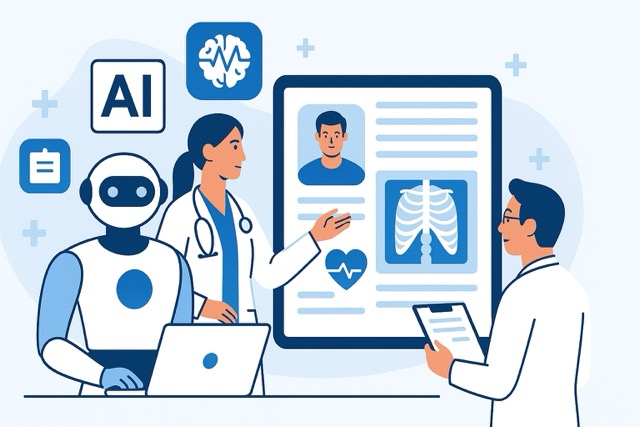
You’ve probably heard the phrase “AI is changing everything,” and nowhere is that more accurate than in healthcare. From the way conditions are diagnosed to how patient records are managed, artificial intelligence is now a central player in improving outcomes, streamlining operations, and making services more accessible. You’re no longer dealing with futuristic ideas—AI is already integrated into the everyday routines of hospitals, clinics, and labs around the world. In this article, you’ll see exactly how AI is being applied to real-world care and what that means for your role in the system—whether you’re a provider, administrator, developer, or policymaker.
AI-Powered Diagnostics Are Saving Lives—and Time
If you’re working in diagnostics, you already know how critical speed and accuracy are. AI tools are cutting through the wait times and helping you make decisions with better precision. Technologies like HeartFlow Analysis use medical imaging data to construct 3D models of coronary arteries, allowing non-invasive evaluation that avoids unnecessary procedures. The NHS in the UK reports saving millions annually by using this tool instead of traditional diagnostic pathways.
In radiology, platforms like Aidoc scan medical images for signs of stroke, fractures, or tumors. They don’t replace your expertise—they highlight cases needing urgent attention and reduce review time, allowing you to focus where it matters most. AI doesn’t guess; it analyzes massive datasets and flags patterns you might miss under time pressure. That means better triage and faster treatment starts, especially for high-risk conditions.
Streamlining the Administrative Gridlock
It’s no secret that paperwork and scheduling eat up time that should be spent with patients. This is where AI becomes a quiet hero. Tools like Cera’s AI Scheduler cut down admin time for healthcare workers by up to 80%, giving nurses and aides more hours in direct care. Instead of manually juggling calendars or filling out redundant forms, AI automates repetitive tasks and learns preferences over time.
You’ll also see more clinics using AI chatbots to handle routine queries. Patients can confirm appointments, check symptoms, or get medication instructions without calling the office. This doesn’t replace your team—it supports them by reducing burnout and improving efficiency. If you’re in charge of operations, introducing AI can bring serious ROI by freeing up time and reducing clerical errors.
Using Predictive Analytics to Keep People Out of the Hospital
Prevention is the future of medicine, and AI is already helping you shift from reactive treatment to proactive care. Predictive analytics lets you identify health issues before they escalate. Cera’s Predict-Prevent system can detect over 80% of major health risks before they happen, cutting hospitalizations by up to 70% among elderly patients.
In areas with limited prenatal resources, AI has helped prevent tragedies. A recent project in Malawi used AI-enabled fetal monitoring to reduce stillbirths and neonatal deaths by over 80%. That’s not just an improvement—it’s a breakthrough. These tools analyze historical health data, symptoms, and trends to send alerts when something’s likely to go wrong. When your system can predict a problem before it turns critical, you save time, resources, and lives.
Personalized Treatment Is Becoming Standard
Personalized medicine isn’t a buzzword anymore. You now have access to tools that digest patient history, genomic data, lifestyle choices, and treatment responses—then recommend precise protocols for each individual. If you’re working in oncology, cardiology, or chronic disease management, you’ve likely already seen platforms that help build tailored plans based on real data, not generalized templates.
AI supports your decision-making by offering evidence-based options that take into account variables you’d otherwise need hours to compare. Instead of spending time parsing through charts, you can focus on explaining next steps and fine-tuning care. Whether it’s dosing medication, choosing therapies, or creating rehab schedules, AI can cut through the clutter and give you a clearer starting point for each case.
Expanding Access in Low-Resource Areas
Global healthcare faces an ongoing shortage of trained providers. If you’re working in rural or underfunded communities, you know how hard it is to reach everyone who needs care. AI helps you bridge that gap. With diagnostic support tools, virtual consultations, and automated triage, you can serve more patients without sacrificing quality.
In places where access to specialists is limited, AI-driven mobile apps can assist nurses and community health workers by analyzing symptoms, flagging urgent cases, and suggesting immediate action. This doesn’t mean less training is needed—it means that your trained staff can reach more people more efficiently. It’s a multiplier effect, and it’s changing the way public health is delivered.
Addressing Mental Health with AI Support
Mental health services are stretched thin everywhere. You might be seeing more patients than ever while struggling to maintain quality of care. AI-powered tools are stepping in to help. Platforms like Woebot and Wysa use conversational models to offer immediate support, helping users manage stress, anxiety, and depression in real-time.
These AI systems aren’t therapists, and they don’t pretend to be. They act as bridges—providing safe, judgment-free spaces where patients can open up and receive helpful resources. For you, this means early intervention. When patients engage with these tools between appointments, they’re more likely to stay on track and flag worsening symptoms before they spiral. That gives you more control and better patient continuity.
You Still Need to Be the Human in the Loop
AI can assist, but it can’t empathize. You still bring the human element that machines can’t replicate. Whether you’re reviewing a CT scan flagged by an algorithm or counseling a patient after an AI risk prediction, your judgment, compassion, and communication matter most. That’s why you’re needed even more—not less—as AI becomes embedded in daily care.
When you understand how to use these tools, you work smarter, not harder. You reduce the risk of burnout and improve patient experiences. You’re not outsourcing thinking—you’re adding support where it helps most. The future of care isn’t about replacing humans. It’s about equipping you with tools that make your job more effective and less exhausting.
Key Benefits of AI in Healthcare
- Faster, more accurate diagnostics
- Reduced paperwork and admin time
- Early detection of health risks
- Custom treatment plans for each patient
- Better care in underserved areas
- Support for mental health monitoring
- Enhanced workflows without replacing human care
In Conclusion
AI in healthcare is no longer a theory—it’s your reality. Whether you’re treating patients, running a facility, designing systems, or shaping policy, these tools are already shaping how care is delivered and experienced. You now have ways to detect illness earlier, personalize treatment more effectively, streamline operations, and reach more patients. But none of that replaces your judgment. You are the decision-maker. AI is your assistant. Together, you can drive better outcomes, one decision at a time.
Explore more thoughts and insights on law, technology, and related fields on this Tumblr blog: Discover insightful posts.

Michael E Weintraub is an attorney and founder of the Law Office of Michael E. Weintraub, LLC in Neptune, NJ. With over 25 years of experience in trials, estate planning, and estate administration, he is known for delivering client-focused legal solutions with integrity and precision.